Source Bamboo Office Chair Mat for Home Hotel Office
Explore 30 listings for Bamboo Office Chair Mat options suitable for home, hotel, and office environments. Buyers can compare features like washability, non-slip properties, and customization availability across different models and suppliers.
Key considerations
Products List


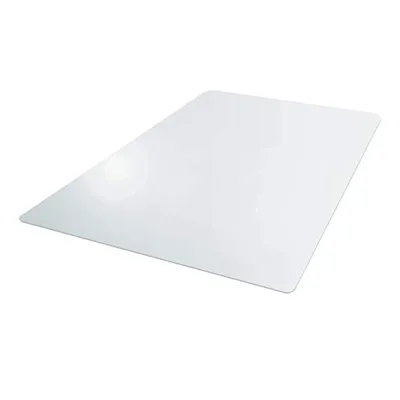
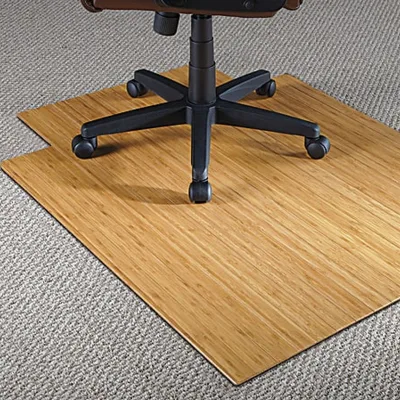
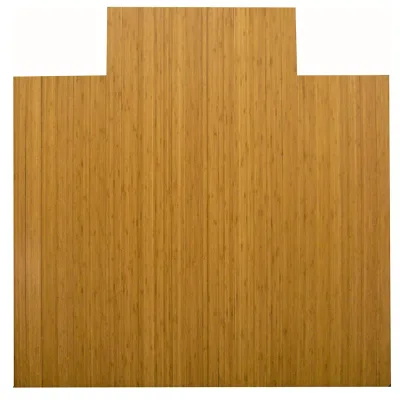



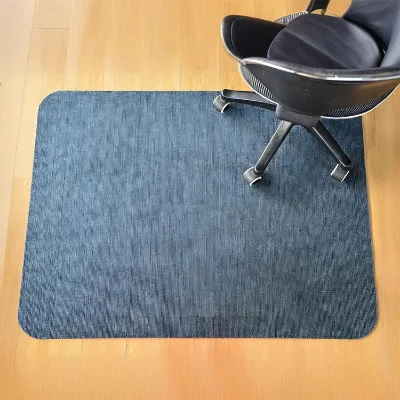
Standard Custom Self Adhesive Backing Office Desk Polyester Material Chair Mat
$2.50 - $3.50
MOQ: 500 Square Meters

PVC Office Chair Mat for Carpeted Floors Waterproof Floor Mat Anti Slip Chair Mat
$5.29 - $7.99
MOQ: 500 Square Meters

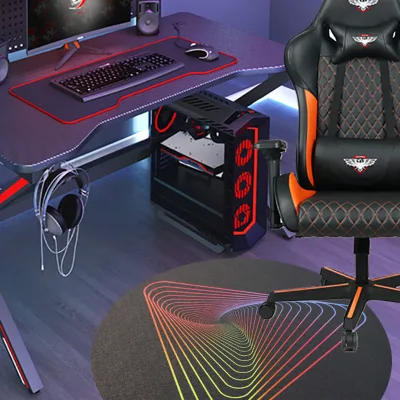




Comprehensive Sourcing Guide
Strategic Sourcing Guide for Bamboo Office Chair Mats
Understanding Product Variants and Material Composition
When sourcing a Bamboo Office Chair Mat, buyers must first navigate a complex landscape of product definitions and material compositions. The term "bamboo chair mat" often implies a specific aesthetic or eco-friendly positioning, yet the actual material composition varies significantly across the market. Based on observed product data, there is a distinct divergence between mats labeled as "Bamboo Chair Mat" and those simply categorized under general chair mats. Some listings explicitly identify the material as bamboo, while others list PVC, Polyester, or Cotton as the primary constituent. This discrepancy requires rigorous verification before placing an order.
The material choice fundamentally dictates the performance characteristics of the mat. Bamboo-based options are often associated with a natural, solid color appearance and a specific texture that complements modern office aesthetics. However, data indicates that many products in this category are actually constructed from PVC or Polyester/Cotton blends. For instance, some listings specify a material of PVC with a thickness ranging from 0.2 to 0.4 cm, while others describe a Bamboo Color finish on a different substrate. Buyers must distinguish between the visual marketing term "bamboo" and the actual structural material. If the primary requirement is genuine bamboo construction, the supplier must provide explicit confirmation of the material composition, as "bamboo" in the product name does not guarantee the entire mat is made of bamboo fibers.
Furthermore, the manufacturing process plays a critical role in the final product quality. Observed data reveals a mix of "Handmade/Other" and "Machine Made" processes. Handmade items may offer unique geometric patterns or custom designs, whereas machine-made products often ensure consistency in dimensions and thickness. The shape of the mat is another variable; while the standard office requirement is often a rectangle, some data points indicate square shapes, and others list specific dimensions such as 36x48 inches or 46x60 inches. Understanding these variations is essential for matching the mat to the specific floor type and office layout.
Technical Specifications and Performance Attributes
Evaluating the technical specifications of a Bamboo Office Chair Mat requires a detailed review of dimensions, thickness, and functional features. The thickness of these mats is a critical factor for both durability and floor protection. Available data suggests a range of "Thin" specifications, specifically noted as 0.2 to 0.4 cm or 0.2 to 0.4 inches. This variation in units (centimeters vs. inches) highlights the importance of clarifying measurement standards with the supplier. A mat that is too thin may not provide adequate protection for carpeted floors, while one that is too thick might create tripping hazards or interfere with chair mobility.
The feature set of these mats is equally diverse. Common attributes observed include "Washable," "Non-Slip," "Stain Resistant," and "PET FRIENDLY." The "Non-Slip" feature is particularly vital for safety, ensuring the mat remains stationary on smooth surfaces or carpet. The "PET FRIENDLY" attribute suggests compatibility with pets, which is a growing consideration in modern office environments. Additionally, some products are described as "Reversible," offering extended usability and aesthetic flexibility. The pattern and style also vary, with options ranging from "Geometric" and "Printed" to "Solid Color" and "Plain."
The following table summarizes the key technical attributes observed in the current market, helping buyers identify which specifications align with their procurement needs:
| Attribute Category | Observed Specifications | Sourcing Consideration |
|---|---|---|
| Material | Bamboo, PVC, Polyester / Cotton | Verify actual composition vs. marketing name. |
| Thickness | Thin (0.2 - 0.4 cm or inches) | Confirm unit of measurement and suitability for floor type. |
| Shape | Rectangle, Square | Match to office layout and chair movement patterns. |
| Features | Washable, Non-Slip, Stain Resistant, Reversible | Prioritize based on high-traffic usage and maintenance capabilities. |
| Pattern | Geometric, Solid Color, Printed | Align with interior design and branding requirements. |
| Packing | Carton, Palletizing, Foam, Cardboard, Polybag | Assess packaging for damage prevention during transit. |
It is also important to note the installation location. Data indicates these mats are designed for "Floor Carpet" installation, which implies specific backing or edge designs to prevent curling or shifting. The "W" and "D" dimensions listed in some specifications suggest that width and depth are customizable or variable, reinforcing the need for precise measurement requests during the inquiry phase.
Compliance, Certification, and Safety Standards
Compliance and certification are non-negotiable aspects of B2B procurement, especially for products used in shared office spaces. While the core keyword focuses on bamboo mats, the actual product listings reveal a mix of certifications and standards. One specific observation notes an "FDA" certification, which is typically associated with food contact safety. This is an unusual certification for a chair mat and suggests that some products in this category may have dual-use potential or that the certification applies to specific components rather than the entire mat. Buyers should not assume that a bamboo chair mat is automatically FDA certified unless explicitly stated in the product documentation.
Regarding safety and performance standards, the data mentions "UL 2818" as a background standard, though its direct applicability to bamboo chair mats is not definitively confirmed in the primary product facts. UL 2818 generally relates to the fire safety of mats and rugs, which is a critical consideration for office environments. However, buyers must verify if this standard applies to the specific bamboo mat they are sourcing. Relying on background knowledge without explicit product confirmation can lead to compliance gaps.
Furthermore, the "prod_standard" field in the data is listed as "Customizable," indicating that suppliers may offer various standard options based on buyer requirements. This flexibility allows for tailoring the product to specific regional regulations or corporate safety policies. However, it also places the burden on the buyer to define the required standard clearly. For instance, if a company requires fire retardancy, the buyer must explicitly request a mat that meets specific fire safety ratings, rather than assuming the "bamboo" material inherently provides this protection.
The "Disposable" attribute is listed as "Non-Disposable," which confirms that these are durable, long-term products. This aligns with the expectation of office furniture that undergoes heavy use. Buyers should also check for any specific environmental certifications, as the "bamboo" aspect often appeals to sustainability-focused organizations. While no specific eco-certifications are listed in the core facts, the "PET FRIENDLY" feature suggests an awareness of environmental impact, which can be a selling point for green procurement initiatives.
Cost Drivers and Pricing Dynamics
The pricing of bamboo office chair mats is influenced by several factors, including material composition, customization level, and order volume. The observed price range in the market spans from $0.20 to $29.00 USD. This wide disparity suggests that the lower end of the spectrum likely corresponds to basic, machine-made PVC or polyester mats, while the higher end may reflect genuine bamboo construction, custom designs, or premium packaging.
The Minimum Order Quantity (MOQ) is another significant cost driver. The observed MOQ range is between 5 and 3,000 units. A low MOQ of 5 units might be suitable for small offices or sample testing, but it often comes with a higher unit price. Conversely, an MOQ of 3,000 units typically unlocks economies of scale, resulting in a lower cost per unit. Buyers must balance their immediate inventory needs with their long-term budget constraints.
Customization is a major factor in pricing. The data confirms that customization is available for design, model, and standard. Customizing the size, pattern, or branding on the mat will inevitably increase the cost. For example, a "Customizable" design with a specific "Geometric" pattern or "Printed" logo will cost more than a standard "Solid Color" or "Plain" option. Additionally, the "Handmade" process, if selected, may incur higher labor costs compared to "Machine Made" production.
Packaging also impacts the final cost. Options range from simple "Carton" packing to more protective "Foam, Cardboard, Polybag" combinations. While better packaging reduces the risk of damage, it adds to the overall unit cost. Buyers should evaluate whether the additional protection is necessary based on the shipping distance and the fragility of the product.
Supplier Evaluation and Operational Capabilities
Evaluating suppliers for bamboo office chair mats requires a focus on their operational capabilities and transparency. The data indicates that the place of origin is primarily "Zhejiang, China," a region known for its manufacturing prowess in textiles and furniture. However, the specific supplier names are not provided, and buyers must conduct their own due diligence to identify reliable partners.
Key evaluation criteria include the supplier's ability to handle customization requests. Since "Customization" is a confirmed attribute, suppliers must demonstrate flexibility in adjusting dimensions, patterns, and materials. The "Process" being listed as both "Handmade" and "Machine Made" suggests that some suppliers may offer both options, allowing buyers to choose based on their quality and budget requirements.
Communication regarding the "prod_model" and "model_number" is crucial. The data lists various model numbers such as "CHAIR MAT," "sx," "dx," and "bt-2006." These identifiers help in tracking specific product lines and ensuring that the ordered item matches the sample. Buyers should request a detailed product specification sheet that clearly maps the model number to the material, dimensions, and features.
Additionally, the "Installation Location" being specified as "Floor Carpet" implies that the supplier should have expertise in producing mats suitable for carpeted environments. This includes ensuring the mat has the correct backing to prevent slipping and the right edge design to lay flat. Buyers should ask suppliers for case studies or references from other clients who have used the mats in similar office settings.
Quality Control and Long-Term Procurement Strategy
Implementing a robust quality control (QC) strategy is essential for ensuring the longevity and performance of bamboo office chair mats. Given the variability in materials and processes, buyers should establish clear acceptance criteria before production begins. This includes verifying the material composition, checking the thickness against the specified range, and testing the "Non-Slip" and "Washable" features.
For long-term procurement, consistency is key. Since the "prod_standard" is customizable, buyers should work with suppliers to establish a fixed standard for future orders. This ensures that every batch of mats meets the same quality benchmarks. Regular audits of the production process, especially for "Handmade" items, can help maintain quality consistency.
Maintenance and cleaning are also important considerations. The "Cleaning & Maintenance" attribute is listed as "Waterproof," which suggests that the mats can be easily cleaned with water. However, buyers should verify the specific cleaning instructions with the supplier to avoid damaging the material. For bamboo or PVC mats, harsh chemicals might be detrimental, so gentle cleaning agents are recommended.
Finally, buyers should consider the lifecycle of the product. The "Non-Disposable" nature of the mats indicates they are designed for long-term use. However, the "Thin" specification (0.2-0.4 cm) might make them susceptible to wear and tear in high-traffic areas. Buyers should plan for periodic replacement or maintenance schedules to ensure continuous floor protection. By focusing on these long-term considerations, organizations can maximize the value of their investment in bamboo office chair mats.
FAQs
What materials are used for bamboo office chair mats?
Materials vary between bamboo, PVC, and polyester cotton blends. Buyers must verify the actual composition as the name may not reflect the structural material.
Can I customize the design and dimensions of the mat?
Yes, customization is available for design, model, and standard specifications. Suppliers offer options for specific sizes and patterns to match office layouts.
What is the minimum order quantity for these mats?
The minimum order quantity ranges from 5 to 3000 units depending on the supplier. Lower quantities suit samples while higher volumes unlock better pricing.
Are these mats suitable for carpeted office floors?
Yes, they are designed for installation on floor carpet. Features like non-slip backing ensure stability on carpeted surfaces in office environments.
What certifications do these products typically hold?
Some listings indicate FDA certification, though this is uncommon for mats. Buyers should explicitly request documentation to confirm safety standards for their specific needs.
How thick are the standard bamboo office chair mats?
Thickness is typically thin, ranging from 0.2 to 0.4 cm or inches. Clarify the unit of measurement to ensure adequate floor protection.